The photo above is courtesy of J.T. Stanton and not of the MS65 just sold. However, it is of the same variety.
July 18, 2003—Sam Lukes of Visalia, California has confirmed the sale of a 1970-S Doubled Die Obverse #1 Lincoln cent graded by Numismatic Guaranty Corporation of America in Mint State 65 Red for $22,500. It appears to be a record price for the rarity in a certified MS65 grade, a bit short of the approximate $24,500 price that Lukes indicated a Mint State 66 Red sold for in a Bowers and Merena Galleries sale some time ago.
Lukes revealed this latest sale represented the third example of the variety he sold that month. He also sold an About Uncirculated 58 certified by the Professional Coin Grading Service (PCGS) for $4000 on June 2nd, and a PCGS Mint State 64 Brown for $6500 on June 6th. The later coin is the one pictured above.
This is the major variety listed by CONECA as DDO-001 (1-0-I-CW). The doubling is strong to very strong on the date and much of LIBERTY and strongest on IN GOD WE TRUST. The1970-S DDO-001 is what specialists refer to as a Class-1/Rotated hub doubled die, the same type found on the more famous 1955 and 1972 doubled die cents. The the shift is described as being clockwise based on the final, stronger image being shifted in that direction.
According to the Cherrypickers’ Guide To Rare Die Varieties by Bill Fivaz and J.T. Stanton, where the coin is listed as FS#1c-029, “the coin is an extremely rare variety in any grade, and definitely one of the rarest of all Lincoln cents.” They have it rated on the Universal Rarity Scale as a URS-5 suggesting that between nine and 16 pieces are known and give it an interest rating of five stars which translates to “high interest.”
Hub doubling is possible due to a phenomenon known as work hardening. This causes the metal of the face of a die to become too hard and too brittle to allow a complete image to be sunk into the die in one operation without causing it to crack or shatter (during the multiple hubbing process). As a result, several impressions or hubbings are required to produce a die when using this process. (The multiple hubbing process was replaced in recent years by the more modern “single squeeze” hubbing process). Between each hubbing the die is removed from the press and annealed (softened) thus allowing for another impression without shattering the die. If for some reason a partially finished die is reinstalled into a press for strengthening and the hub and die are improperly indexed, resulting in a misalignment of images, or if the hub varies in design from the one(s) used for earlier impressions — hub doubling will result.
In this case, the misalignment was caused by a rotational misalignment between the die and hub with the pivot point somewhere near or at the center of the die.
Collectors should be cautioned that cents from the San Francisco Mint dated between 1968 and 1970 (and many other dates and Mints) are exceedingly common displaying a form of doubling known as “Strike Doubling,” (frequently referred to as “machine doubling damage” or “mechanical doubling” by others), a form of damage to the coin created during or just prior to ejection, a split second after the strike. These damaged coins are often found by uninformed collectors who think they are doubled dies. Hub doubling adds value to a coin while strike doubling adds no value.
Spurts of interest in high-profile doubled dies occur whenever a record sale of a legitimate item occurs at a lofty level such as this coin. This prompts searches of rolls of coins by uninformed collectors, followed by the logical flow of strike doubled coins offered as doubled dies, shortly thereafter.
The doubling for this variety must be identical to what is shown in the images above for it to be the major doubled die. Other legitimate but relatively minor doubled dies exist for this date.
So just when DID single-squeeze hubbing begin in the US? It’s a darn good question and the answer is a bit clouded. However, until lately, in spite of your webmaster for years repeatedly stating that it started in 1985 or 1986, (Fiscal Year 1986), everybody else kept quoting 1997 as the year of introduction. And they couldn’t have been more wrong! It really wasn’t until Coin World Editor, Bill Gibbs, recently asked me to confirm the accuracy of my statements in a feature article that I got to thinking. While it was Gibbs’ job to confirm my facts, which I did by directing him to the source, it was at this point I realized that many other folks probably needed to confirm these little-known facts first hand before they were going to believe them. After all, incorrect information had been quoted so many times by so many knowledgeable writers for so long that they had become fact in spite of being wrong! In effect, the true facts when quoted by this one “lone wolf” were going in one ear and out the other. So if you’re one of those folks who have been reading those erroneous reports for nearly a decade, it’s time to reeducate yourselves by seeing the facts for yourself first hand!
Before reading the report note that it is for Fiscal Year 1986. The Mint’s FY for 1986 ran from Oct. 1, 1985 to Sept. 30, 1986 so we really cannot be sure from the report, which year they began their experiments with single squeeze hubbing. It could have been as early as the later part of 1985 but we can only be sure that at least by 1986 dies were being made via this process. Their statement makes clear that by 1986 the process had been used for master dies, working hubs and was already in “pilot testing for production dies.” So where did those “production dies” go? My educated guess is that any that were of suitable configuration and quality got put into use! How else could they test the suitability of such dies in actual use other than to strike coins from them? As you will see in future reports, knowing the correct date can be a helpful addition to numismatic researchers!
Introduction
Explaining the difference between die doubling (doubled dies, repunched dates, repunched mintmarks among others) and the more confusing forms of doubling can be very challenging and even more difficult for a novice to comprehend. Additionally, there are times when determining the difference can be frustrating for even a very experienced collector.
August 27, 2015—Eric Boraca send this image and an email saying, “I found this in a roll of Silver Eagles I’ve had for over ten years. I decided to check them for the heck of it and am glad I did. I had sent the pictures to Joe Rizdy at LaGrange Coin and he said to send them to you for the [CONECA] website. As you will see, the strike through is kinda large but no friends of it were found in the roll. Unless they got spotted and picked out maybe someone out there has it’s brother or sister in their possession for the progression. Hope you enjoy!” Thanks for sharing Eric!
July 29, 2011—NGC has discovered what may be the first mint error in the America the Beautiful five ounce series. The coin, a 2010-P Yellowstone, has a matte Specimen finish on the Washington side and a brilliant, lustrous finish on the other. This mint error appears to be unique at present, but it is possible that others await discovery.
Just when you’d think that everything that was major for a coin over 20 years old could have been found, up pops a beautiful 1988 Doubled Die Obverse cent that vies that of the famous 1984 cent. The doubling on the 1988 is very strong on the earlobe.
Christopher Beck of FL originally reported the variety to error-variety coin specialist Billy Crawford of SC in early May. Crawford then purchased the coin and eventually sent it to me for my own examination and an opportunity to photograph it.
The doubling of the earlobe on this new variety is very similar in strength to that evident on the 1984 Doubled Ear cent that has been listed in A Guide Book of United States Coins nearly since it was first discovered by Richard Austin in the same year.
Additionally, it is even stronger than that of the 1997 Doubled Ear cent now listed in the A Guide Book of United States Coins — Professional Edition.
However, there are significant differences between all of three of the coins. The doubling on the 1984 cent is the result of an Off Set limited pressure tilted hubbing that allowed the doubling to be more extensive, effecting not only the earlobe, but also Lincoln’s beard, bowtie, vest and other areas. The 1997 also sports more extensive doubling but beyond the earlobe none of it is easy to see.
The 1988 is the probable result of a Tilted Hub doubled die with doubling restricted to just the earlobe.
In spite of the fact the doubling is less extensive on this variety than on the other two well-known doubled-ears, in my opinion this one should be considered a major variety. The earlobe is the PUP (pick up point) and is really the most important aspect on all three of the doubled ear varieties described here. I personally like this one better than the 1997 doubled ear due to its strength and I have to wonder how rare it may be considering it’s nine years older than the 1997 and is just now being reported.
Bill Fivaz and I have slated it for inclusion in the next edition of the Cherrypickers’ Guide To Rare Die Varieties as FS-101. I am the editor or CPG while Fivaz is coauthor with JT Stanton. It has also been listed by CONECA, John Wexler, Billy Crawford and CopperCoins.com. The CONECA is DDO-003, Wexler is WDDO-009, Crawford is CDDO-008, and Coppercoins is 1DO-010.
In 1997 when the first doubled die cent was discovered that was produced from dies presumed to be made via the single-squeeze hubbing process, (showing on the coin as a double earlobe), I first proposed that a tilted hub seated into position by the force of the single impression of the hub was the most probable cause. Since that time most specialists have come to agree that this is the most probable explanation for most (if not the vast majority) of significant single-squeeze produced doubled dies.
However, many of us also recognized that this same scenario could have been occurring during the multiple hubbing process era during the first pass of the hub into the die blank. This coin was produced during the experimentation stages of the single squeeze hubbing process and could be the result of either process.
It should be understood that the face of a die blank is machined with a slightly conical configuration to aid in the flow of metal during hubbing. This would indicate that the initial kiss of a hub into a die blank would be restricted to this centralized area before continuing on to fill out the rest of the design. During this process if the die blank was tilted slightly the tip would be positioned slightly off location away from the center of the hub into a different area of design than intended. If during this process the die blank then seated itself properly due to the pressure of hubbing, the impression would shift location and thus the misplaced area of doubling on affected dies.
I thank Billy Crawford for sending in the coin!
A look at an overlay of the 1988 and markers by Jason Cuvelier
The correct degree of hardness is a critical factor in the minting of coins. If an unstruck planchet is too hard the image pressed on the coin will not be clear. If it’s too soft, the coin will wear too quickly. The U S Mint uses a Rockwell Hardness Test on all raw coin material (including copper- plated zinc blanks). (US Mint, E-mail 8/24/2015, Diamond, 2006, Page 16).
The test procedure involves pressing a 1/16″ metal ball into the coin material with a known amount of pressure and measuring the depth of penetration. There are other Rockwell Scale Protocols for harder materials where either a different sized ball or a spheroconical diamond is used to make the indentation. The Scale Protocol currently used for coin material involves the lightest pressure that can be used by a Rockwell tester.
Specifically,
“…the Rockwell test makes two depth measurements. The ball (say) is brought in contact with the material to be tested. The preliminary force is applied for a set length of time, and then the depth of the indentation is measured. Then the force is increased in a set rate until it reaches the total force. This force is kept constant for a predetermined period, after which the force is reduced to the preliminary force level. After a set period of time, the depth of the indentation is measured for a second time. Usually the entire process is carried out by automatic machinery.
The Rockwell hardness is calculated from the difference between the depth of the indentation after the application of the total force and its initial depth under the preliminary force. Call this difference, in millimeters, h.” (Sizes, 8/12/2015)
The Superficial Rockwell Hardness Number equals one hundred minus the fraction h over one thousandth of a millimeter. {R15T# = 100-(h/0.001)}.
The U S Mint currently uses the Superficial Rockwell 15T measurement protocol. (Concurrent Technologies Corporation, Page 40) This protocol uses Preliminary Force = 29.42N (3 kgf) and Total Force = 147.1N (15kgf).
(N = Newton; 1 Newton is the force needed to accelerate 1 kilogram of mass at the rate of 1 meter per second squared. kgf = Kilogram-force. It is equal to the magnitude of the force exerted by 1 kilogram of mass in the average magnitude of gravity on earth).
While this paper focuses on Rockwell Tests on planchets, it should be acknowledged that Rockwell Tests are also performed on dies and on master hubs. “A die that is too hard will be brittle and have a tendency to fail prematurely. A die that is too soft will deform and deteriorate too quickly.” (Diamond, Page 16) A die which has had a Rockwell Test will leave a raised bump on the coin. This same source shows a photo of a 2000 Lincoln Cent with a small, circular indentation just above Lincoln’s bow tie. It has been proposed that this is from a Rockwell Test on a Master Hub since the same mark can be seen in preceding and subsequent years without change in position. However, it should be noted that neither such a circular indentation from a Test on a Master Hub nor a raised bump from a Test on a Die will leave a “mirror image” of the indentations on planchets being discussed here. The shapes of these indentations will be different. (See a discussion of this in Appendix A).
Planchets with Rockwell Test Marks are very rare to extremely rare. (Harper and Miller, Page 62.) “Dies and planchets tested in this fashion are supposed to be discarded, since they are blemished once the procedure is completed. If they are not discarded, then you have a desirable die error and planchet error, respectively.” (Diamond, Page 16)
There is a notable lack of consensus in the Numismatic Community over whether there are actually any legitimate Rockwell Test Marks on coins. Absolute certainty requires that the test itself be witnessed and the planchet followed through the complete minting process!
There are, however, some accounts of coins with alleged Rockwell Test Marks. “Rockwell test marks applied to planchets before the strike are recognized among some U.S. coins. At the time they wrote their book, Steiner and Zimpfer (1975) recognized such errors as the exclusive output of the San Francisco Mint. They list cents (business strikes and proofs) and proof half dollars. Elsewhere I have read that such errors are largely or exclusively restricted to S-mintmark cents from the early 1970’s (I can no longer remember the source, however).” (Diamond Page 17; Steiner and Zimpfer, pp. 122-123.)
This same source shows an image (shown below with permission) of an alleged Rockwell Test Mark in planchet on a 1971-S Lincoln Cent.
Figure 1
This was authenticated as a Rockwell Test Mark by “Lonesome” John Devine. The author states that this example is convincing.
“The floor of the cup-shaped depression is completely smooth, as would be expected of a dimple produced by a pin tipped by a small steel ball. Although there is no metal flow in the design bordering the crater, there is also no trace of a pressure ridge, indicating that the defect was present before the strike. The pit is oval, rather than circular, but this can be attributed to distortion produced by the strike. There is always the chance that such a defect could be the result of a struck-in or rolled-in piece of debris that fell out after the strike. But the smooth texture of the pit and its central location provide a strong argument in favor of a Rockwell test mark.” (Diamond, Pages 17 – 18)
“Lonesome” John Devine, who died in 2013, was a highly respected error coin pioneer. He was a founding member of the Combined Organizations of Numismatic Error Collectors of America (CONECA) and the first inductee into the CONECA Hall of Fame. He created the Error Coin Museum, which was the umbrella under which the Collectors of Numismatic Errors (CONE) and the Numismatic Error Collectors of America (NECA) were able to merge into CONECA in 1983. (Fern and Potter, July 30, 2013)
This description provides a working definition of how a Rockwell Test Mark in planchet is to be recognized. I would add the notation that the depression would appear more hemispherical if it were not located adjacent to devices which contribute to its elongation. Otherwise, there is minimal distortion of the mark by the strike, as can be seen by observing the shape of the mark on the East/West axis.
I would also add that there must be no bulge on the opposite face. Such a bulge would indicate the use of greater pressure than a Rockwell Test allows. Even if it were from a Rockwell Test such an “anvil effect” would indicate that too much pressure had been used and the resulting Rockwell Number would likely be inaccurate. (Low, Samuel R. III, Page 5) Such a bulge would also have occurred after minting, since the minting press would likely remove most traces of a bulge made before minting.
The composition of the Lincoln Cent (except for 1943 when the cent was zinc coated steel) up to 1962 was 95% copper and 5% tin and zinc. In 1962 the cent’s tin content, which was quite small, was removed. This alloy of 95% copper and 5% zinc remained until 1982 when the composition was changed to what is commonly called copper plated zinc. Cents of both compositions appeared in 1982. This alloy from 1982 to the present is actually Zinc Alloy 190 electroplated with 8 microns of copper. (Concurrent Technologies Corporation, Page 1, Section 1.1) ALLOY 190: COMPOSITION (% by Weight) Lead = 0.005 max; Iron = 0.010 max; Cadmium = 0.005 max; Copper = 0.7 to 0.9; Zinc = Balance. (Jarden Zinc, 8/12/2015)
A comparison of the hardness of Lincoln Cents minted before 1982 and after 1982 yields some interesting results. The copper alloy used in pre-1982 cents is 45 on the Rockwell B Scale. (Olin, 9/3/2015) This converts to 76 on the 15T scale. (England, 9/1/2015) Conversion tables are known to be reasonably accurate, but not 100%. (Dusharme, 9/2/2015; Low Page, 13) The actual 15T Rockwell Hardness on this 1976D was measured at 75.2 (Figure2). (See Acknowledgements for sources of Rockwell Testing mentioned in this paper).
Figure 2
“Hardness between 62 and 72 Rockwell 15T are [sic] considered nominal (standard) for RTS Zinc planchets at the United States Mint.” (RTS= Ready to Strike). (Concurrent Technologies Corporation, Page 42) The actual value on this 2000-D was measured at 59.1. In Figure 2, it can be seen that the indentation on the 2000-D cent is slightly larger and deeper than the indentation on the 1976-D cent. This is due to the softer material. Even though the zinc-based coin is significantly (21%) softer than the copper-based coin, the actual effect on the indentations is modest.
With regard to the Rockwell test mark authenticated by “Lonesome” John Devine, (Figure 1), the indentation appears larger than the indentations illustrated in Figure 2. My suspicion is that the U S Mint used the Rockwell B Scale for tests prior to 1982. Using the B Scale is not recommended for copper alloys unless the thickness is greater than 1 mm. (Materion Corporation, Page 1) Lincoln cents minted before 1982 have a thickness greater than 1.5 mm.
The following comparison images are instructive (Figure 3). The two images are overlays of Rockwell test marks on the obverse design placed over the reverse design to show how the dimples might appear on the Memorial columns. These same images without overlays may be seen in Figure 4. It should be noticed that the diameter of the indentation on the John Devine authenticated coin is slightly less than that on the Rockwell B Scale indentation. I believe that the reason for the difference in diameters is due to the effect of the strike on the indentation. The strike reduces the size of the diameter.
Figure 3
I should note that the U.S. Mint disagrees with my speculation that the Rockwell B Scale was used for tests on Lincoln cents prior to 1982. I informed the Mint of my suspicion and received this response:
“No, actually Hardness 15T Scale was used prior to 1982, as well as currently. We believe the only coin that used the Rockwell Hardness B Scale was the 40% silver (silver clad) Kennedy half dollar from 1965 – 1970.” (U S Mint, E-mail 9/17/2015)
If this response from the Mint is correct, then it is improbable that the indentation in the 1971-S cent is a Rockwell Test Mark.
Rockwell B Scale is typically used with copper alloys. Use of the C scale on Lincoln cents produces an anvil effect (a raised area on the opposite side of the coin) and leads to inaccurate Rockwell Number readings.
The respective Scale pressures are (Low, Table 1):
Rockwell C Scale: Preliminary Force = 98.07N (10 kgf) Total Force = 1471N (150kgf)
Rockwell B Scale: Preliminary Force = 98.07N (10 kgf) Total Force = 980.7N (100kgf)
Rockwell 15T Scale Preliminary Force = 29.42N (3 kgf) Total Force = 147.1N (15kgf)
Here is a comparison of images of indentations produced by the 3 scales:
Figure 4
The current hardness range specifications for Lincoln Cents minted after 1982 is slightly higher than that for Cupronickel (the Incumbent Material for 5-cent coins) and even higher than that for Cupronickel-Clad C110 (the Incumbent Material for Quarter Dollar Coins). (Concurrent Technologies Corporation, Pages 43-44) Lincoln cents are currently harder than nickels and quarters!
The company that supplies zinc planchets to the U S Mint, Jardin Zinc, does Rockwell Hardness Tests on their Rolled Zinc Strip (Jardin, 8/12/2015) and on blank planchets before shipping where customer specifications require that it be done. (Jardin Zinc Sales 8/14/2015).
I talked with a person at Concurrent Technologies Corporation, the company that did the Alternative Metals Study for the U S Mint. He said that a Rockwell test mark on a zinc planchet will still be visible after a coin is struck on that planchet. He says that it will probably be altered somewhat, but it is impossible to say exactly how because too many other factors are involved.
We are accustomed to thinking that if an imperfection on a coin satisfies the diagnostics associated with a particular mint error, then we can assign it to that mint error. For example, a cud (marginal die break) is unlikely to be confused with any other defect. In other words if it looks like a duck, walks like a duck, and quacks like a duck, then it is a duck!
However, with a Rockwell Test Mark, this way of thinking may not be appropriate. It may be possible for an indentation to match the description of a Rockwell Test Mark without actually being a Rockwell Test Mark. The only way I know to be certain that a mark came from a Rockwell Test is to have actually witnessed the test which, of course, is not possible! The most we can say is that a particular indentation meets the expectations of a Rockwell Test Mark. A Rockwell Test Mark should have a smooth, hemispherical cross section profile and assume the shape of a circle or an oval (if it is adjacent to a device). There should be no anvil effect (a raised area on the opposite side of the coin) and no pressure ridge around the circumference of the depression.
I now introduce 2 coins (found while coin roll hunting) that we can analyze as to whether the indentations found on their surfaces qualify as potential Rockwell Test Marks. One is a 2000-D Lincoln Memorial Cent with one indentation on the reverse (Figure 5). The other is a 1995-D Lincoln Memorial Cent with two indentations on the Reverse (Figures 6 & 7).
Figure 5
Even though the indentation on the 2000-D cent appears to be the correct size and shape, a detailed examination appears to show a pressure ridge around the circumference. Therefore this cannot be a Rockwell test mark.
The other cent with indentations is a 1995-D Lincoln Cent with 2 indentations of the same size:
Figure 6
Figure 7
These indentations seem to show the correct shape for a hardness test mark. As was observed in the 1971-S cent authenticated by John Devine, the diameter of the indentation may be slightly smaller than the indentation on the reference coin, due to some “closing up” during the strike. I notice that the indentation to the right of the Memorial has a slight elongation (East/West) towards the last column of the Memorial, as would be expected with a Rockwell Test Indentation.
I know the odds are low that a Rockwell Test Mark will make it through the minting process. I am also thinking that the odds are low – or even much lower – that a random contact mark on a coin
• would have the same hemispherical cross-sectional profile as a Rockwell Test Mark AND
• show the same depth as a Rockwell 15T test mark AND
• have the same diameter as a Rockwell 15T test mark (adjusted for the strike) AND
• not leave a pressure ridge AND
• not leave an anvil effect (bulge) on the opposite side of the coin.
I know of no way to calculate the probability of all those things occurring as a result of random post-mint damage – but I think it would be astronomical. It would be even more improbable for all these things to occur twice on the same coin as the result of random post-mint contact, as appears on this 1995-D. On the other hand, Rockwell Testing Protocol does suggest that an object be tested at least twice so the results can be averaged.
“Because of the relatively small volume of material affected by the hardness test, care must be taken to obtain representative test data. Several measurements should be taken to avoid a false reading caused by microstructural inconsistencies such as hard beryllide particles or grain boundaries. Hardness should be checked on cross sections when nonuniform cold work causes high surface hardness. The depth of penetration of the indenter must be less than 10% of the metal thickness, and the reading must be taken at least two indenter diameters from an edge.” (Materion Corporation, 9/4/2015).
I am thinking that there is a high probability that these are Rockwell Test Marks on this 1995-D Lincoln Cent.
Appendix A
Another type of Rockwell Test Mark which may be found on Lincoln cents is a raised bump. If there is an indentation on a die caused by a Rockwell Test, then it would be transferred to the coin as a bump during the strike. I think it is important to understand what appearance we might expect this bump to take.
Steel for dies is supplied to the U S Mint by Latrobe Specialty Steel Company, a Division of Carpenter Technology. The steel alloys are Alloy 52100 for small diameter coins and Alloy L6 for quarter on up. They are sold in the spheroidized annealed condition to a maximum Rockwell C hardness and certified capability hardness to a minimum Rockwell C hardness level. Everything is in Rockwell C scale. This hardness range is approximately 33 to 58 Rockwell C hardness. (Carpenter Technology, E-mail 9/22/2015)
Alloy 52100 is a deep hardening steel alloy used for aircraft bearings and other high stressed parts where good rolling contact fatigue strength is required at temperatures below 400⁰F. Its typical composition is 1.05% C, 0.35% Mn, 0.30% Sn, 1.50% Cr, and the balance Fe. (Latrobe, 52100)
Alloy L6 is a versatile oil-hardening tool steel that is characterized by good toughness and is suitable for tools, dies and machine parts. Its relatively high nickel content gives it greater impact toughness. Its typical composition is 0.70 C, 0.60 Mn, 0.25 Si, 0.70 Cr, 1.40 Ni, and the balance Fe. (Latrobe, L6)
The level of hardness of these steel alloys requires testing with the Rockwell C Scale. The requirements for using this scale with this level of hardness necessitate the use of a spheroconical diamond tipped indenter. (Low, Table 1) This means that the resulting indentation will have a different conformation than the hemispherical shape discussed in this paper for Rockwell 15T Tests.
I have sketched an overlay of the Rockwell 15T 1/16″ Ball Indenter cross section imposed on a cross-sectional view of the spheroconical diamond indenter tip so that the differences may be visualized. (Figure 8) (Low, Table 1). The size of the 1/16″ ball indenter is about 4 times the size of the spherical portion of the spheroconical indenter.
Any mark on a coin thought to have originated from a Rockwell Test on a Die (where the mark on the coin would be raised) or Master Hub (where the mark on the coin would be an indentation), would need to exhibit the same shape as in this cross sectional view of the spheroconical diamond tip indenter rather than the hemispherical shape of a Rockwell 15T Test Mark. According to my calculations, once the diameter of the mark exceeds approximately 0.28 mm, the slope of the sides will no longer be curved as they would be for a hemisphere, but will be straight and sloping outward at 120⁰ to reflect the shape of the cone portion of the indenter.
Figure 8 (Low, Page 24 Section 3.3.8.1)
Appendix B
Since beginning this research project, I have encountered numerous reactions proposing that some other object caused these indentations. Among the proposals for candidates: a stylus of some kind, a ball point pen, or a BB. I have attempted to take these ideas seriously and have come to the realization that a critical piece of information in considering each possibility is the nature of the geometry of the tips of these instruments.
It is simply impossible to examine the tips of the myriad styli in the world today! I think that it is simply best to observe that a stylus is a possible source. However, holding a 1/16″ ball bearing in my hand impresses upon me how tiny such a tip must be. I also wonder just how many might have a hemispherical shape. I am not aware of any stylus which meets these criteria, but perhaps there is one.
Thinking about a ball point pen is somewhat simpler. The tip of a ball point pen is approximately hyperbolic and merges into a cone. This means that an indentation made b y a ball point pen must express that same geometry. Here is a photo of the tip of a ball point pen next to a 1/16″ ball bearing. (Figure 9)
Figure 9
I have done a few calculations to try to see what a BB strike would need to look like. The calculations are easier if the imagery is reduced to a circle with a chord, representing the surface of the coin, cutting through it (rather than a sphere with a plane cutting through it).
The formula to calculate a chord length = 2 x the square root of (the radius squared – the distance of the chord from the center of the circle squared). (It is a lot easier, even, to use a Chord Calculation site. (Chord) I invite you to check out my math.
Imagine a sphere which makes an indentation on a blank. If it indents ½ way (a full hemisphere), then it leaves a mark with a diameter = the diameter of the sphere. If it indents ¼ (a ½ hemisphere) then it leaves a mark of approximately 2/3 the diameter of the sphere.
The caliber of a normal BB gun is 4.5 mm. The normal diameter of a BB is 4.4 mm.
For a Rockwell Ball indenter using B and 15T Scales, the diameter is = 1.58 mm (1/16″).
The diameter of many of the marks we are seeing on these Lincoln Cents is in the neighborhood of ½ to 1 mm. The depth of the mark is what translates into the hardness number and also what translates into the diameter of the mark. The strike of the die will also adjust the diameter a bit (making it smaller) and may also give it some elongation (especially when it is adjacent to a device).
For a 1/16″ Rockwell Ball Indenter, a 1 mm diameter will represent an indentation of approximately ½ of the hemisphere. This is enough indentation to leave rather steep, upward sloping, sides to the mark.
For a BB to leave a 1 mm diameter indentation, the depth of the indentation must be only about 1/20 of the diameter of the BB – which would leave an extremely shallow slope to the sides of the mark.
This means that most of the marks which have been thought to be BB strikes have sides which are too steep to be made by a BB. They are, in other words, too deep to be made by a BB and also leave only an approximate 1 mm diameter depression. The 1 mm diameter depression left by a BB strike would be almost flat! A smaller diameter mark would be even flatter and very shallow! In addition, a BB would most likely leave a pressure ridge around the circumference of the depression. It may also leave an anvil effect (raised area) on the opposite side of the coin.
I have made a crude drawing in an attempt to illustrate this. It is not exactly to scale, but I think that it is close enough so that the concept can be understood. (Figure 10)
Figure 10
Acknowledgements
Thanks to Mike Diamond for editing assistance.
Thanks to Bob Saylor and Pyramid Machine Shop of York, PA., for Testing with Rockwell B and C Scales.
Thanks to Mark Obstalecki, Numismatist, for Testing with the Rockwell F Scale.
Thanks to Sydney at Baseline Data in Aransas Pass, TX. He tested Rockwell 15T Scales. Here is a photo of this testing. (Figure 11)
Figure 11
References
Carpenter Technology, E-mail communication with a Sales Representative, Received 9/22/2015.
Concurrent Technologies Corporation, “Alternative Metals Study”, Final Report, August 31, 2012 Contract Number: TM-HQ-11-C-0049 Submitted to the U S Mint, http://www.usmint.gov/about_the_mint/PDFs/ctcr-alternative-metals-study-2012-08-31.pdf 8/12/2015.
Chord Calculation Site https://www.easycalculation.com/area/chord-length-circle.php
Diamond, Mike, “Rockwell Test Marks: The Definite and the Dubious”, ErrorScope Vol 15 No 4, July/August 2006.
England, Gordon, (Independent Metallurgist and Consultant to the Thermal Spray Coating Industry) Surface Engineering Forum, “Hardness Scale Conversion Table” http://www.gordonengland.co.uk/hardness/hardness_conversion_3c.htm 9/1/2015.
Fern, Ronn and Potter, Ken, “Another Error Coin Pioneer Passes … Lonesome John Devine 1933-2013”, CoinWeek July 30, 2013, http://www.coinweek.com/coins/error-coins/another-error-coin-pioneer-passes-lonesome-john-devine-1933-2013/ 9/14/2015.
Harper, David C. and Miller, Harry, U.S. Coin Digest, 11th Edition, (Krause Publications).
Low, Samuel R. III, NIST Recommended Practice Guide, National Institute of Standards and Technology, Technology Administration, U.S. Department of Commerce, Special Publication 960-5, “Rockwell Hardness Measurement of Metallic Materials” Materials Science and Engineering Laboratory January 2001. http://www.nist.gov/manuscript-publication-search.cfm?pub_id=853006 8/15/2015.
It has been proposed by CONECA’s 20th/21st Century Attributer of US Die Varieties, James Wiles that the coin listed by him earlier as a doubled die is actually the result of clashed dies. Ken Potter, John Wexler and many others disagree. Potter’s analysis is presented below.
The problem with the die clash theory is that any design elements from the reverse that could have caused it are so far removed from the areas where clash normally occurs that it’s impossible for it to repeat over and over again as suggested by Dr. Wiles even if rotated dies were involved.
The olive leaf clash in front of the lips is well above the lips and thrust outward in a position nowhere near that of any of the “hot lips” varieties, which Dr. Wiles in an email to me suggested was part of the cause of the doubling.
In regard to the 1953-S and 1955-S, Dr. Wiles said: ” It was discovered that all had die clash marks and when overlays were made, the reverse design matched the doubled areas. But in truth one only has to look at the overlays I’ve created to see that just isn’t true.
Dr. Wiles says the doubled areas are all “too similar” to be the result of hubbing mishaps, however, we have a hub doubled earlobe variety listed for just about every State quarter and beyond. All of any prominence are remarkably similar.
All clash marks I’ve seen on Roosevelt dimes that show in the fields of the obverse are incuse and the doubled lips are raised and rounded without a single indication of abrasion (which Wiles throws into the mix) just like a doubled die.
Die abrasion of the era that can sometimes be found around designs is never exacting. It appears like the dark patch of abraded filed below Roosevelt’s throat were it extends to meet the normal field.
I and John Wexler, (who first examined the 1964-D and listed it), and many other prominent numismatists, originally felt this coin (and others like it) is the result of hub doubling.
Still, it must be noted that attributing die varieties is not an exact science and there has been and there will continue to be varying opinions on certain die varieties. Remember, the 1869/8 Indian Head cent, the 1958/7-P&D Lincoln cents, the 1980-D&S cent, the 1950-S/D dime, and many others have all been debunked by respected attributers, which often included folks who made the original attributions.
Also, remember, that the opinion of one is not necessary the opinion of all in a group such as CONECA. It represents one person and one person only who in this particular case is in the minority. It would be nice if Dr. Wiles could provide the overlays he created to demonstrate that this doubling is the result of die clash or abrasion.
Notice that the areas of strongest doubling, the lower lip and below through the upper chin, and the forehead above the eye socket, aren’t even remotely close to any design from the opposing side of the coin.
Left: 1964-D “Hot Lips” Doubled Die dime. Red arrow points to an area where clash often remains after dies have been abraded. It is not there.
Right: A 1965 SMS Roosevelt dime with a strong die clash.
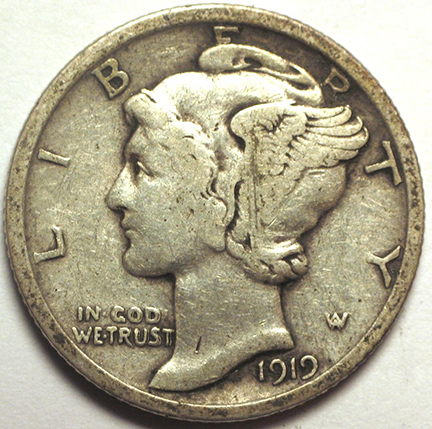
February 25, 2015 — An exciting new doubled die error has been found on a 1919 “Winged Liberty” or Mercury Head dime. In terms of the degree of rotation between the two impressions it is almost as great as that seen on the famous 1955 Doubled Die Obverse (DDO) cent, but because of a quirk of fate the doubling is confined to only one small area of the die.
The doubling on the die, though very strong, is a rare form of hub doubling that resulted from a partially-hubbed die with an incomplete design receiving a second, full impression not aligned with the incomplete first impression, as opposed to the 1955 DDO which has two full designs offset from each other. On this new die the doubling is confined to the upper right portion of the motto IN GOD WE TRUST, taking in all of the letters in “GOD” and “UST” plus the upper right corners of the “N” of IN and the “R” of TRUST. The dot between IN and GOD is also doubled.
An exciting new doubled die error has been found on a 1919 “Winged Liberty” or Mercury Head dime. In terms of the degree of rotation between the two impressions it is almost as great as that seen on the famous 1955 Doubled Die Obverse (DDO) cent, but because of a quirk of fate the doubling is confined to only one small area of the die.
The doubling on the die, though very strong, is a rare form of hub doubling that resulted from a partially-hubbed die with an incomplete design receiving a second, full impression not aligned with the incomplete first impression, as opposed to the 1955 DDO which has two full designs offset from each other. On this new die the doubling is confined to the upper right portion of the motto IN GOD WE TRUST, taking in all of the letters in “GOD” and “UST” plus the upper right corners of the “N” of IN and the “R” of TRUST. The dot between IN and GOD is also doubled.
No doubling can be seen on the large letters of “L I B E R T Y” near the rim, or on the date or the designer’s initials which are also near the rim, or on Miss Liberty’s head. Though this was not certain based upon the well-circulated “Discovery Specimen,” which I would estimate would grade at a strong Fine, the lack of additional doubling was subsequently verified on a higher grade coin.
The variety was co-discovered by New York state collectors Scott Kerr and Jeffrey Sam. Kerr apparently discovered the piece many years ago, probably in the late 1980’s as best as he can recollect, but he never published it. Like many collectors he bought coins from acquaintances to acquire normal coins that he needed for his collection, and thinks that this piece may have come in a set of Mercury dimes that he bought back around then, but he just doesn’t know for sure.
The Discovery Specimen ended up in a 2×2 cardboard holder on which was written “1919 IN GOD WE TRUST doubling???” Kerr admits that he is not sure if he is the one that wrote that on the holder, or if he bought it from another collector already in that holder. Either way he put it in his “Neat Box” along with the rest of his variety and error collection, which contained some very interesting known varieties, where it remained for perhaps a quarter of a century.
Kerr and Sam are old friends from their local coin club, and they had discussed Sam buying the “Neat Box” for some time. They finally shook hands on the deal on Jan. 31 of this year, and on Feb. 3rd Sam began posting some of the pieces in a thread in the PCGS Collectors Universe Forums. One was the very rare 1857 Flying Eagle cent with clash marks on its reverse from the reverse die for a Liberty Seated quarter, while others were merely minor die varieties or mechanical errors, and a few were simply damaged coins.
On the third day of adding coins to the thread he ran several pictures of the DDO dime. Amazingly it was almost lost to posterity again, being dismissed by one forum member as displaying simple mechanical doubling, and by another as being a counterfeit coin. Nobody acknowledged it as a doubled die error. I had looked at the thread on the day that it had first been posted, but did not look at it again later because I did not know that additional varieties were being added. I suspect that other people overlooked the updates also.
Then on Feb. 8th Sam posted a new thread on the NGC Collectors Society Message Boards, showing just the 1919 dime, and mentioning that he had posted it “across the street” on the CU forum. He asked if anybody on the CS message boards had “seen something like this before.” I told him that I had.
The piece reminded me of the 1916 DDO Buffalo nickel, the Holy Grail of doubled die collectors. The die for that coin shows one complete design hubbed over a partial design. The way that working dies were made back in that era meant using a raised steel “hub” that had all the design on a finished coin on it, and pressing it into a die blank under heavy hydraulic pressure. To help the negative impression form properly in the die, the face of the die blank had a shallow raised cone on its surface.
As the hardened hub contacted the annealed (heat-softened) die blank, the design started forming at the point of that shallow cone. It slowly expanded outwards until the die blank became so work hardened by the pressure that the steel in it could distort no more. At that point the partially-hubbed die had to be taken to a furnace and re-annealed, which involved heating it to a certain temperature and letting it cool slowly overnight. It was then returned to the hubbing room and impressed again as many times as necessary until the incused design was fully sunken into the die, after which the die was hardened and readied for use in coinage.
It is not known how far out from the center of the die the design normally formed on its first hubbing operation, but many years ago die variety guru Bill Fivaz showed me his Uncirculated specimen of the 1916 DDO nickel and we remarked upon how it had extremely strong doubling on the top right two-thirds of the date, which is relatively far from the rim, but was not doubled at all on the lower left part of the date or on the designer’s initial below the 6, which are closer to the rim.
On that coin you could tell that the initial hubbing had faded out along an arc concentric to the rim that ran through the horizontal date, and that when the die was given its second hubbing the Mint worker failed to properly align the images. That was why the word LIBERTY was not doubled on the 1916 die, as it fell outside the area formed by the first impression, while the long feather behind the Indian’s neck is doubled where it is closest to the center of the coin, because it fell within the affected area.
The working die for the 1919 Doubled Die Obverse dime was hubbed the same way, with those parts of the horizontal IN GOD WE TRUST further in from the rim being formed during the first hubbing operation, and those parts closer to the rim not being formed at all. Because the partially formed and re-annealed die did not need to have as much metal relocated during the second hubbing operation the hubbing press should have been able to complete the motto and the rest of the design on the second impression, though for all we know three impressions or even more may have been the norm. The famous 1918/7-S Standing Liberty quarter had its 8 hubbed over an already formed 7, and that 7 was very close to the rim.
At my suggestion Jeff Sam sent the coin to Bill Fivaz for verification, and Fivaz confirmed that it is indeed the result of a doubled working die and not machine doubling or some other type of striking error. He and “Cherrypickers’ Guide” co-author J. T. Stanton have assigned it the reference number FS-101 for that date, and they will include it in the Sixth Edition, Volume 2 of the CPG when that is eventually published. Volume 1 of the Sixth Edition is currently in production. It is expected that the variety will eventually be recognized by CONECA as well.
As of this writing only one additional specimen of this doubled die has been discovered, by coin dealer John Hodson of Munster, IN. He saw a notification of the new variety that I posted on the coin dealer network Coinnet, and went through his inventory and found a high grade piece. That piece has also been examined by Fivaz and declared to be a true Doubled Die error, confirming the attribution of the Discovery Specimen.
February 23, 2013—I attended the 55th Suburban Detroit Coin Show Jan. 24-26, in Livonia, MI where I represented CONECA, offered free error-variety coin examination services and shot photos of some of the coins that came in. This year there where so many coins that I decided to narrow my semi-annual article on this show down to the one coin for each day that I felt were the most unusual.
I included a really nice 197? cent struck on a spectacular horizontally split planchet (submitted by our own Al Raddi), an Off Center 1922 Belgium (Fr. Leg) 50 centimes that was found in a “junk box” and a very rare 1977 Roosevelt dime with a predominantly copper reverse that was rolled to proper thickness. More photos of his finds can be seen in the the hard-copy version of Numismatic News. See the Numismaster.com article HERE.

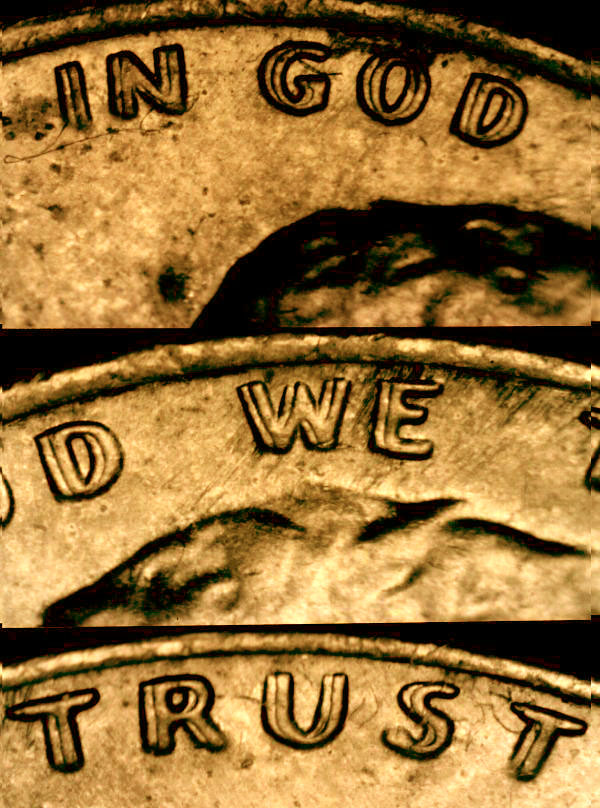

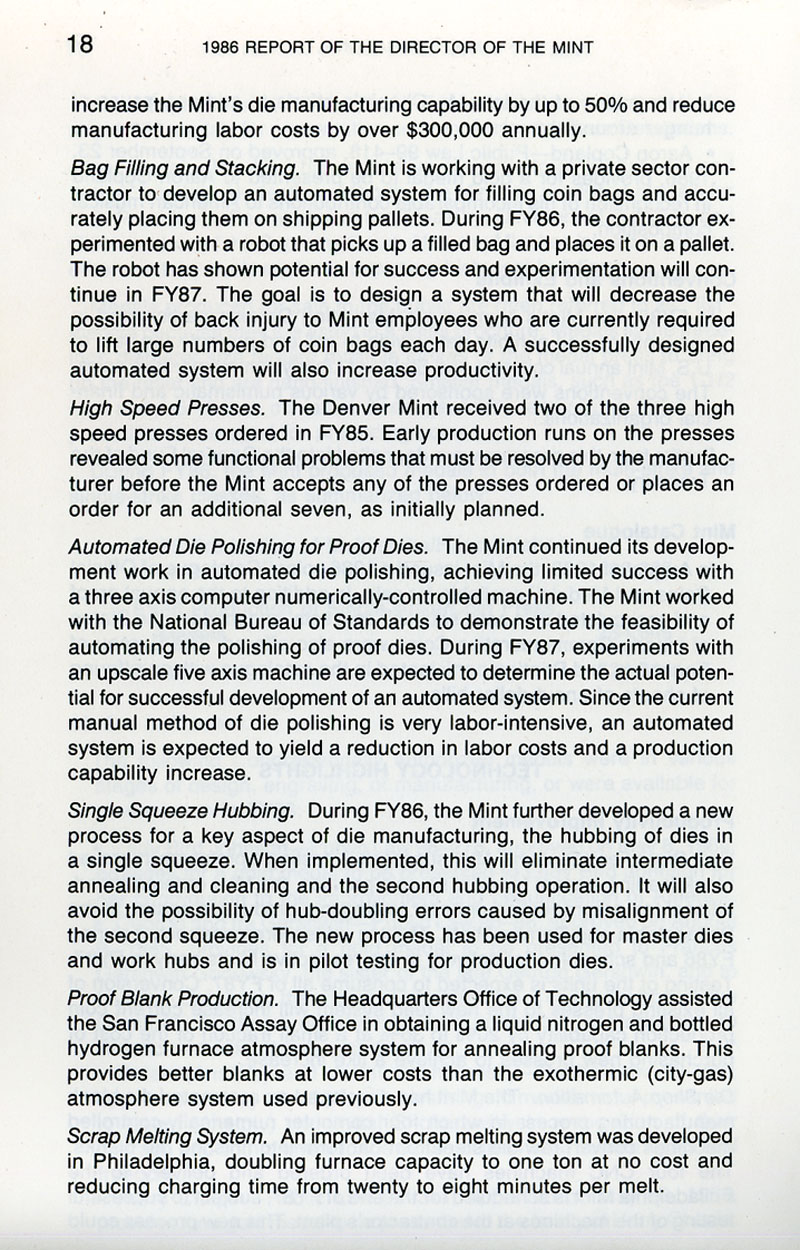
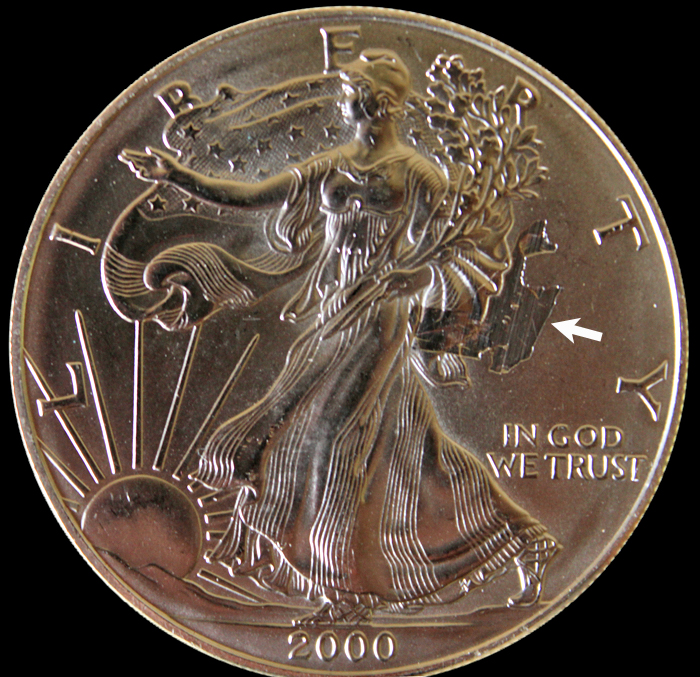
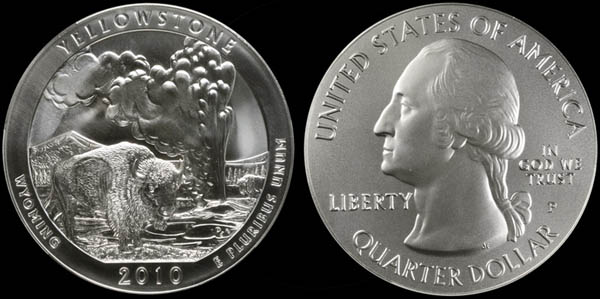
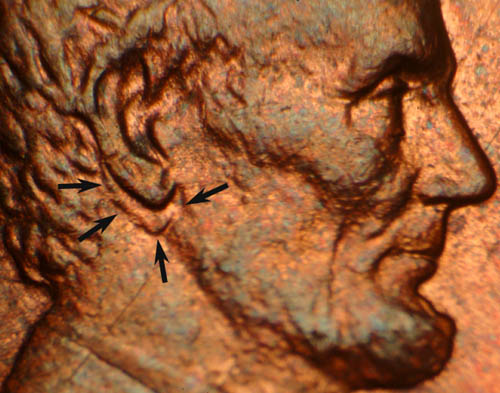


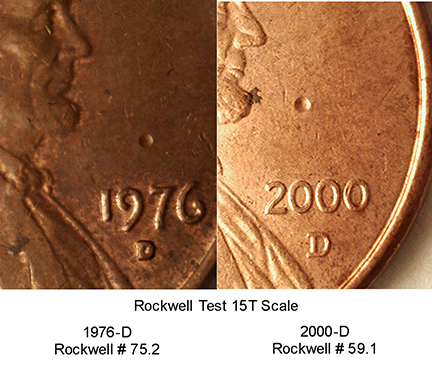 Figure 2
 Figure 3
 Figure 4
 Figure 5
 Figure 6
 Figure 7
 Figure 8 (Low, Page 24 Section 3.3.8.1)
 Figure 9
 Figure 10
 Figure 11